"I have always imagined that Paradise will be some kind of library." ~ Jorge Luis Borges

Sunday, December 7, 2014

Tools for Teaching and Learning with the Mock Caldecott

I enjoy running a Mock Caldecott unit with my students. Each year, we review the criteria, read the books, and place our votes. 

The Books
You can find the six books we'll be reading and exploring on this blog post: The 2015 Mock Caldecott List.


The Criteria
Each year I would wrestle with language that I think will make the Caldecott Medal Criteria more accessible to my elementary students.  The task is daunting and I was never sure I got it right.  Until last year... I decided to take the five criteria and translate them into this:

"In identifying a “distinguished American picture book for children,” defined as illustration, committee members need to consider:"

a.   Excellence
b.   Appropriateness
c.   Importance
d.   Appeal


The Signage
I plan to create posters in the library similar to this:

And have questions like this near our reading rug:

Do these illustrations demonstrate excellence in the technique (collage, painting, wood carvings) employed? 

Is the technique employed a good match for the mood, tone and themes in the story?

Are the illustrations critical to the understanding of the story? 

Will the design of the book and the illustrations appeal to a child audience? 

The Tools
The students will be using a 
Google Form to evaluate each book.


The final vote will also be via Google Form.

As for how this will all occur before January 29th (when I leave for ALA Midwinter), well, that's what I'll be working out tomorrow night!

~~~~~~
For those who want to know where I started, here's the official language:

Criteria
"In identifying a “distinguished American picture book for children,” defined as illustration, committee members need to consider:

a.   Excellence of execution in the artistic technique employed;
b.   Excellence of pictorial interpretation of story, theme, or       
      concept;
c.   Appropriateness of style of illustration to the story, theme or 
      concept;
d.   Delineation of plot, theme, characters, setting, mood or 
      information through the pictures;
e.   Excellence of presentation in recognition of a child audience."

[Adopted by the ALSC board, January 1978. Revised, Midwinter 1987. Revised, Annual 2008.]
http://www.ala.org/alsc/awardsgrants/bookmedia/caldecottmedal/caldecottterms/caldecottterms


The 2015 Mock Caldecott List

I can understand why most teacher librarians have Mock Caldecott lists of 20 or more. It is hard to pare down the number of books, especially given that our goal is to expose students to literature and literature awards. I don't have enough time to explore that number of books. Given my schedule, what I want to cover about the Caldecott, and the experience I want for the students, I have to narrow the list down to five or six. This year I have a friend and colleague to help!

After a month of deliberating, my friend, and Library Pal, Laura Given (@liblaura5) and I have come up with our top six books. We'll be teaching this unit with each of our third grade classrooms and coming together for Skype visits and voting.  We'll be reviewing Caldecott Criteria, exploring books, and eventually voting following the same procedure of the Caldecott Committee.

So which books will be considering? In alphabetical order, they are:

Written and Illustrated by Dan Santat


created by two of my 5th graders.

~~~~~~~~~~~~

by Raúl Colón


~~~~~~~~~~~~~


~~~~~~~~~~~~~

Written by Mac Barnett
Illustrated by Jon Klassen


~~~~~~~~~~~~~

Written by Jen Bryant
Illustrated by Melissa Sweet


~~~~~~~~~

Written and Illustrated by Yuyi Morales


Saturday, December 6, 2014

With these flaws in mind, there is still interesting data here...

Wrapping up Picture Book Month has been a longer and more difficult process than I anticipated, each time I look at statistics I see an additional step I should take or connected reflection that I should go back to the students with. Case in point: all month long, the students in grade three through five were marking their progress toward their writing challenge goal, as in the form above. There were several flaws in my approach, which, if I do this next year I will change. 

Flaw number one: I didn't leave enough time during library visits to allow for this. 

Flaw number two: the form itself caused confusion for students - were the numbers meant to be cumulative or not? 

Flaw number three: the location of the sheets was not conducive to remembering to fill out the form.  

With these flaws in mind, there is still interesting data here and I am sorely tempted to go back to the students one more time and ask why they think the data from class-to-class and participation varied as much as it did. I have a few theories, but they are just theories or suppositions without their voices.

Theory number one: The students were more engaged and read more when there was broader class engagement and participation.

Theory number two: The decision to keep this a physical form (as opposed to a virtual one where the students would not see each other's challenge numbers and progress) was a good one.

There are conclusions that I can state from the data.

Conclusion number one: A majority of students reached or read beyond their challenge.

Conclusion number two: Location of the form on the door had no relation to participation - the form in the lowest position that required the students to kneel down was one of the best participating classes.

Conclusion number three: The data is not clear enough to draw any other conclusions - there are too many independent variables. (*humor from a former analyst*).


Take a look at the forms below and tell me what you see and what you conclude. I have removed students' names and the homerooms on purpose as my intent is not to celebrate or demonize any particular class. 


I did run more circulation statistics and below the forms, you will see classroom and individual data. It follows that the classrooms with the highest circulation statistics had the students with the highest circulation statistics, but since I know which classrooms match the numbers above, I can also tell you that many students were reading from home and classroom libraries as well and therefore these statistics do not represent the whole picture.


And... enough...it is Saturday...thank you for taking the time to read this and comment!

Thursday, December 4, 2014

The EduBlog Awards


Wow! I've been chosen as a finalist in the Best Library/Librarian Blog Category of the EduBlog Awards.The Edublog Awards is a community based incentive started in 2004 that promotes and demonstrates the educational value of blogs and social media.
I am among bloggers that I admire and follow. If you read this blog, I would appreciate your vote. While you are there, please vote for the other school library blogs that you follow. Missed that last link? Vote here: Edublog Awards

About voting: the thumbs up icon must turn blue and you will see the words, "Thanks for voting!" beside the thumb. You will also need to sign into List.ly to vote. You can do this through your Twitter, Facebook, or Google+ account. Need more information?The directions are below.

There are many categories to vote in, so why stop here?
Best individual blogBest group blogBest new blogBest class blogBest student blogBest ed tech / resource sharing blogBest teacher blogBest library / librarian blogBest administrator blogMost influential blog post of the yearBest individual tweeterBest twitter hashtag or twitter chatBest free web toolBest educational use of media (audio, video, podcast, etc.)Best educational wikiBest open PD / unconference / webinar seriesBest educational use of a social networkBest mobile appLifetime achievement

Best Library/Librarian Blog - 2014 Edublog Awards
View more lists from Edublogs

~~~~~~~~~~~~~~~~~~~~~~~~~~~~~~~~~~~~~~~~~~~~~~~
How to Vote:
Voting With List.ly!

This is the second year in a row where we have leveraged public voting using List.ly. This means you can:
**see the real-time vote counts
**vote for more than one of your favorites!
**embed the actual list and let people vote right on your blog!
**the Tweeter and Lifetime Achievement categories have a built in twitter list you can follow

You must login with or create a Listly account to vote – this is the only way we can make it fair so you can only vote once per finalist per category.

Let us know in the comments below if you are having any problems with voting or have any questions.

How to Vote
You vote as follows:
1.  Go to the Awards Category you want to vote on using the links above.
2.  Click on the  Thumbs Up icon on the blog, website or person you want to vote for.
That’s it! If you aren’t already logged in to list.ly, you can do so using a facebook, twitter, LinkedIn, or Google+ account.

"How many insects are in a rotting log?"

That was the question posed by a first grader engaged in a science project based upon a rotting log. The students had an opportunity to practice authentic inquiry and develop a question inspired by their new understanding of the food chain. 

The Rotting Log Project
The students are studying the rotting log in their classroom. They have been learning about and observing this habitat. The students were given various inhabitants of the rotting log to study. The student teacher created a packet for the students that included prompts for information gathering. 

The students used nonfiction books along with the PebbleGo and Encyclopedia Britannica to gather information. The students had been learning about nonfiction books during November, so this was a perfect opportunity to practice using them for information gathering.

I met and planned with the student teacher and helped pull books. We scheduled two library visits. At the start of the first visit, I demonstrated how to navigate to and through the electronic resources. For this first visit, I preloaded the browser for the students. For the second visit, I helped some students and they helped others. 

What does a library full of first grade information gatherers look and sound like?


The students' scientific sketches are as unique as the students themselves:


Rotting Log Food Chain Questions posed by the students:


How many insects are in a rotting log?

What eats a salamander?

What eats a beetle?

What eats a bobcat?

What is the difference between a food pyramid and a food chain?

What does a salamander eat?

What does a worm eat?


I love when my library looks and sounds like this!

Wednesday, December 3, 2014

Wherein we Skype with Debbie Ridpath Ohi and our library pals

Yesterday we had a Skype visit with Debbie Ridpath Ohi. It was fabulous. Debbie was energetic and personable, and shared valuable advice about writing and art with the students. 
What made the visit doubly fabulous was the fact that we were also connecting with our Library Pals in Minnesota. 

Prior to the visit
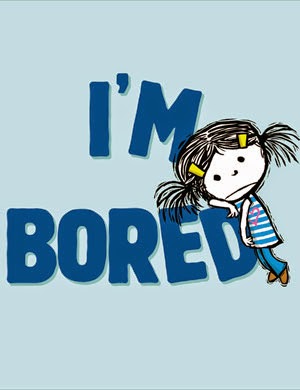
We read I'm Bored! written by Michael Ian Black and illustrated by Debbie Ridpath Ohi. We then watched a short clip of her creating a potato illustration for the book. We also explored her website to learn a bit about her and finished up by brainstorming questions. I couldn't resist showing the students some of Debbie's found objects doodles.


During the visit
As the students entered the library, Debbie was on the screen drawing at her easel. This made the transition quite easy as seventy-five students quietly found a seat so as to not disturb the process. Debbie read I'm Bored interactively - with the students in both schools playing the part of the potato. It was an energetic and personality-infused reading. After reading the book, Debbie showed the students how she creates her illustrations and ideas for making found objects art. She did this while answering questions and talking about her background and her philosophy. Debbie was not trained as an artist, so her message about being passionate about a thing and then doing it until you get good was effective and enlightening for the students who absolutely loved the drawings in I'm Bored.


After the visit
The students wrote down additional questions. These questions can often be more interesting as they have been sparked by a connection the student has made with the author or illustrator.

"If you had gone to art school, what difference would we see?"

"What is your favorite/least favorite thing about illustrating?"


"Did boredom as a kid inspire your illustrations for the story?"

"Do you base your character on real people?"

"What do you do when you are not writing?


What a great visit it was! I know my students will look at and read these books differently because of this connection they now have with Debbie.

We are looking forward to this new book!